

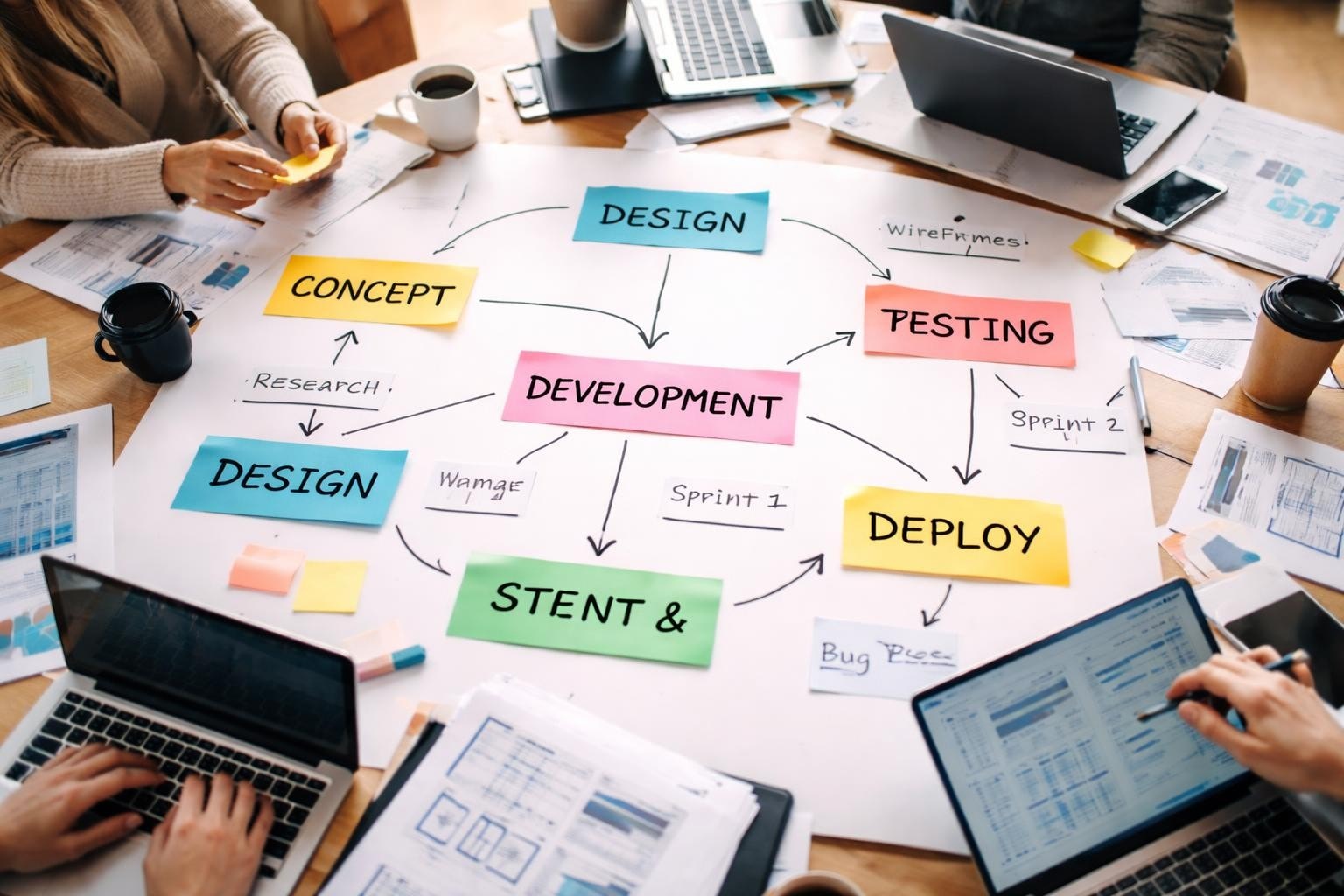
Every successful application development project begins with a clear vision and ends with a product that solves real problems. Whether you're a first-time founder or an experienced entrepreneur, understanding the nuances of application development can mean the difference between a product that gains traction and one that never sees the light of day. In 2026, the landscape of building digital products has evolved dramatically, with no-code platforms and agile methodologies enabling faster, more cost-effective development cycles than ever before.
Understanding the Application Development Project Lifecycle
An application development project comprises several distinct phases, each requiring careful planning and execution. The journey typically begins with ideation and validation, moves through design and development, and culminates in deployment and ongoing maintenance.
The initial discovery phase sets the foundation for everything that follows. During this critical period, founders must articulate their vision clearly, identify target users, and validate that a genuine market need exists. This phase often includes competitor analysis, user interviews, and preliminary technical scoping to ensure feasibility.
Key Phases Every Project Must Navigate
Planning and Requirements Gathering
Before a single line of code is written, successful teams invest significant effort in understanding requirements. This involves:
- Documenting user stories and acceptance criteria
- Creating detailed feature specifications
- Establishing technical constraints and dependencies
- Setting realistic timelines and budget parameters
- Identifying potential risks and mitigation strategies
The planning phase directly influences project success rates. Teams that rush through requirements gathering frequently encounter scope creep, budget overruns, and missed deadlines later in the development cycle.
Design and Prototyping
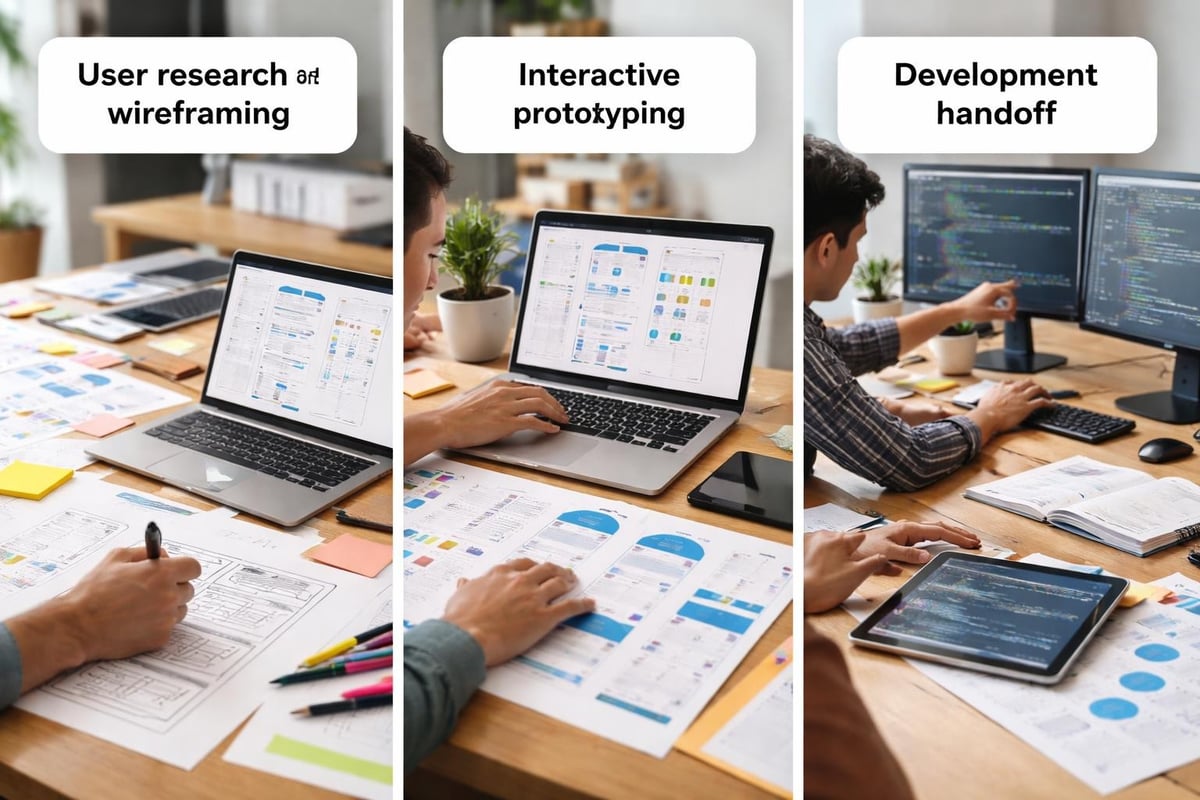
Once requirements are established, the focus shifts to user experience and interface design. Modern application development projects prioritize user-centric design, ensuring that every interaction serves a clear purpose and enhances usability.
Prototyping allows teams to test concepts before committing significant resources to development. Tools like Figma and Adobe XD enable rapid iteration, whilst no-code platforms such as Bubble.io allow functional prototypes that closely resemble the final product.
Choosing the Right Methodology for Your Application Development Project
Selecting an appropriate project management methodology significantly impacts development velocity and team collaboration. Different approaches suit different project types, team sizes, and organizational cultures.
Agile Development: The Modern Standard
Agile methodologies have become the dominant approach for application development projects in 2026. This framework emphasizes iterative development, continuous feedback, and adaptive planning rather than rigid upfront specifications.
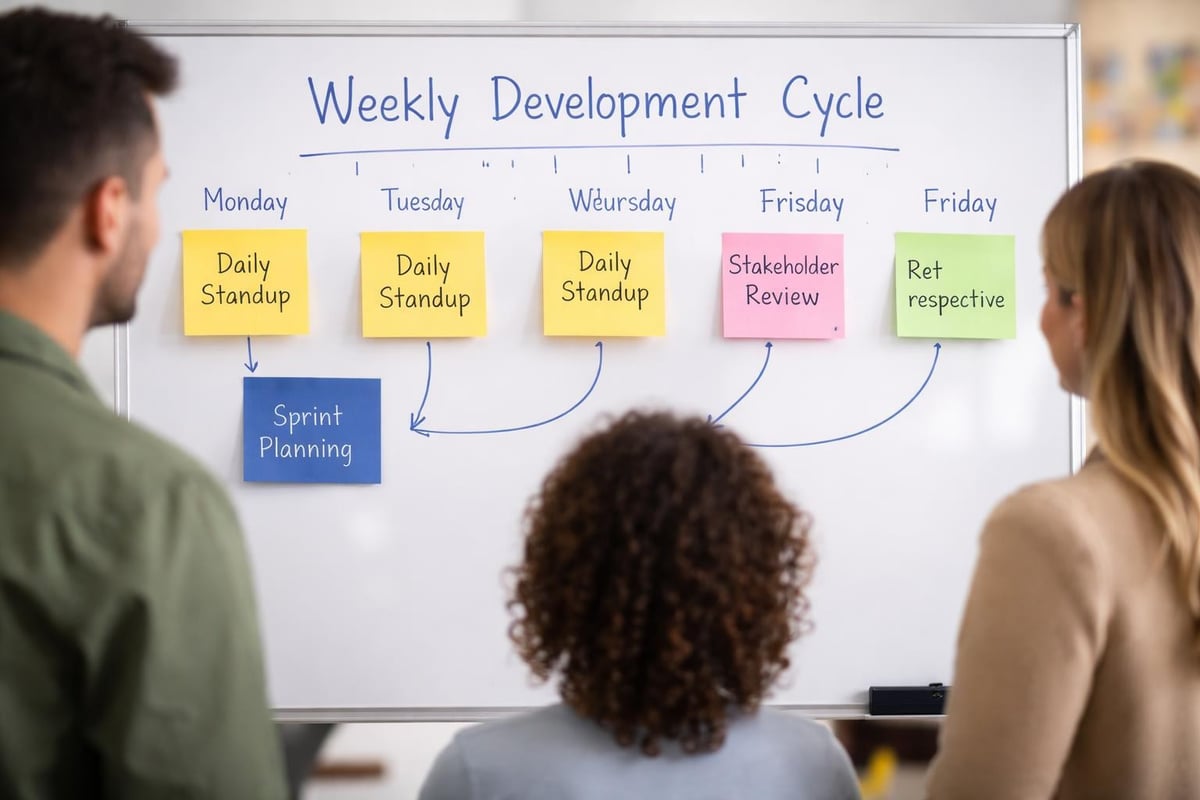
Sprint-based development allows teams to deliver working features every two to four weeks. This cadence provides regular opportunities for stakeholder review, course correction, and priority adjustment based on emerging insights or market conditions.
| Methodology | Best For | Key Advantage | Potential Drawback |
|---|---|---|---|
| Scrum | Complex projects with evolving requirements | Structured sprints with clear ceremonies | Requires experienced Scrum Master |
| Kanban | Continuous delivery environments | Visual workflow management | Less structured planning |
| Lean | MVP development and validation | Waste reduction and rapid learning | May oversimplify complex features |
| Waterfall | Fixed-scope, regulatory projects | Clear documentation and milestones | Limited flexibility for changes |
The methodology you choose should align with your project's unique characteristics. Startups building an MVP Development typically benefit from Agile approaches that accommodate rapid iteration based on user feedback, whilst enterprises with strict compliance requirements might require more documentation-heavy processes.
Hybrid Approaches for Maximum Flexibility
Many successful teams adopt hybrid methodologies that combine elements from multiple frameworks. For instance, a project might use Scrum's sprint structure whilst incorporating Kanban's continuous flow for certain workstreams like content creation or bug fixes.
This pragmatic approach recognizes that no single methodology perfectly fits every situation. The goal is not methodological purity but rather delivering value efficiently whilst maintaining team morale and code quality.
Technical Architecture and Technology Selection
The technical decisions made early in an application development project have long-lasting implications for scalability, maintenance costs, and feature velocity. Architecture choices should balance current needs with anticipated future growth.
Evaluating Development Approaches
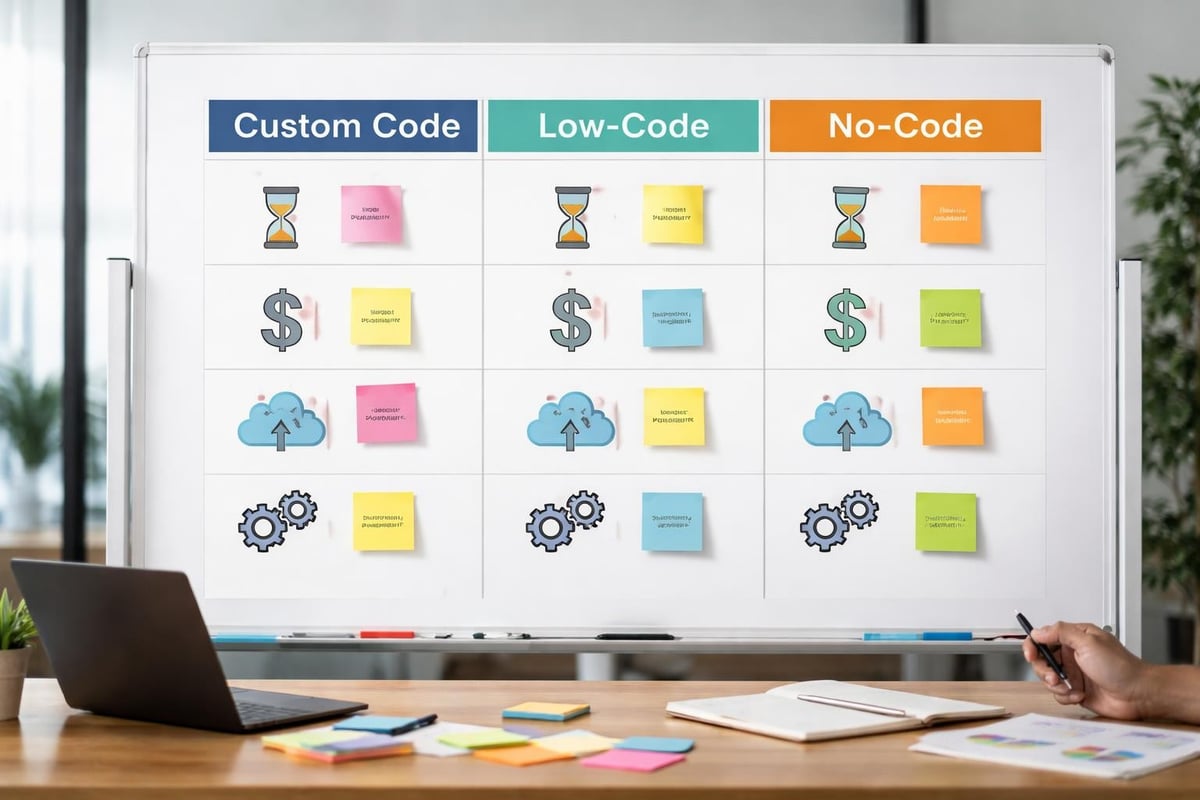
In 2026, founders face a broader range of development options than ever before. Traditional custom coding, low-code platforms, and no-code web development platforms each offer distinct advantages depending on project requirements.
Custom Development Considerations:
- Maximum flexibility for unique features
- Full control over performance optimization
- Higher initial development costs
- Longer time to market
- Requires specialized technical talent
No-Code Platform Advantages:
- Dramatically reduced development timelines
- Lower initial investment requirements
- Built-in scalability and security features
- Easier iteration and updates
- Growing ecosystem of plugins and integrations
For startups seeking to validate ideas quickly, no-code platforms have proven particularly effective. Building a proof of concept with tools like Bubble.io enables founders to test market assumptions without exhausting capital on extensive custom development.
Scalability and Performance Planning
Even applications starting with modest user bases should be architected with growth in mind. An application development project that requires complete rebuilding at scale represents a costly missed opportunity.
Key scalability considerations include:
- Database design that accommodates increasing data volumes
- Caching strategies to reduce server load
- API architecture that supports future integrations
- Infrastructure choices that enable horizontal scaling
- Performance monitoring and optimization workflows
Modern cloud platforms provide infrastructure that scales automatically, but application-level optimization remains crucial. Poor database queries or inefficient code can create bottlenecks that infrastructure alone cannot solve.
Best Practices for Application Development Projects
Following established best practices throughout your application development project minimizes technical debt and accelerates delivery. These principles have been refined through countless successful (and unsuccessful) projects across the industry.
Code Quality and Maintainability
Maintainable code saves time and money throughout the application's lifecycle. What seems like a minor shortcut during initial development can multiply into hours of debugging and refactoring later.
Essential quality practices include:
- Consistent naming conventions across the codebase
- Comprehensive commenting for complex logic
- Modular architecture that separates concerns
- Regular code reviews by team members
- Automated testing for critical user paths
Even in no-code environments, these principles apply. Bubble.io workflows should be organized logically, with clear naming and documentation that enables other developers to understand and modify functionality efficiently.
Security from the Ground Up
Security cannot be an afterthought in modern application development projects. Data breaches damage reputation, erode user trust, and can result in significant financial penalties under regulations like GDPR.
Implementing application development best practices requires attention to multiple security layers:
- User authentication and authorization
- Data encryption in transit and at rest
- Input validation to prevent injection attacks
- Regular security audits and penetration testing
- Secure API design with proper authentication
- Compliance with relevant data protection regulations
Security should be integrated into every development sprint, not addressed as a separate phase before launch. This continuous approach identifies vulnerabilities early when they're less expensive to address.
Project Management and Team Collaboration
The human elements of an application development project often determine success more than technical choices. Even the most elegant architecture fails without effective communication, realistic planning, and collaborative problem-solving.
Defining Clear Roles and Responsibilities
Ambiguity around ownership creates delays and frustration. Successful projects establish clear accountability for each aspect of development, design, and project coordination.
| Role | Primary Responsibilities | Key Skills |
|---|---|---|
| Product Owner | Feature prioritization, stakeholder management | Business acumen, communication |
| Project Manager | Timeline coordination, risk management | Organization, leadership |
| UX/UI Designer | User research, interface design | Empathy, visual design |
| Developer | Technical implementation, code quality | Programming, problem-solving |
| QA Specialist | Testing, bug identification | Attention to detail, analytical thinking |
In smaller teams, individuals often wear multiple hats. A founder might serve as both product owner and project manager, whilst a developer handles both frontend and backend work. The key is making these combined responsibilities explicit rather than assumed.
Communication Protocols That Work
Regular, structured communication prevents misunderstandings and keeps all stakeholders aligned. Weekly sprint planning sessions, daily stand-ups, and retrospectives create rhythm and accountability.
Documentation serves as the project's memory, capturing decisions, rationale, and technical specifications. Tools like Notion, Confluence, or even well-organized Google Docs ensure knowledge persists beyond individual team members.
Testing and Quality Assurance Strategies
Quality assurance transforms good applications into exceptional ones. A robust testing strategy catches issues before users encounter them, protecting your reputation and reducing support costs.
Comprehensive Testing Approaches
Different testing methodologies serve distinct purposes within an application development project:
- Unit Testing: Validates individual components function correctly in isolation
- Integration Testing: Ensures different modules work together seamlessly
- User Acceptance Testing: Confirms the application meets business requirements
- Performance Testing: Identifies bottlenecks under various load conditions
- Security Testing: Probes for vulnerabilities and exploits
Automated testing proves particularly valuable for regression prevention. As features accumulate, manually testing every user path becomes impractical. Automated test suites run quickly and consistently, flagging unintended consequences of code changes.
Beta Testing with Real Users
No amount of internal testing replaces feedback from actual users in real-world conditions. Beta testing programmes identify usability issues, uncover edge cases, and validate that the application solves problems as intended.
Recruiting beta testers requires offering clear value in exchange for their time and feedback. Early access, exclusive features, or direct influence over product direction motivates quality participation.
Launch Planning and Go-to-Market Strategy
The development phase represents only part of a successful application development project. Launch planning determines whether your carefully crafted product finds its intended audience and gains initial traction.
Pre-Launch Preparation
Months before launch, successful teams begin building anticipation and assembling the infrastructure required for a smooth release. This preparation includes:
- Setting up analytics and monitoring tools
- Preparing marketing materials and landing pages
- Establishing customer support channels
- Creating user documentation and onboarding flows
- Developing launch day communication plans
A phased rollout often proves less risky than an all-at-once launch. Releasing to a small initial group allows you to identify and address issues before they affect your entire user base.
Monitoring and Optimization Post-Launch
Launch day marks the beginning of a new phase rather than project completion. Monitoring user behaviour, analysing engagement metrics, and gathering feedback inform ongoing optimization.
Key metrics to track include:
- User acquisition and activation rates
- Feature usage and engagement patterns
- Performance metrics and error rates
- Customer support ticket themes
- Conversion funnel drop-off points
This data-driven approach to post-launch optimization ensures your application evolves based on actual user behaviour rather than assumptions. Understanding what type of app business you're building helps contextualize these metrics within appropriate benchmarks.
Resource Planning and Budget Management
Financial sustainability requires realistic budget planning and disciplined resource allocation throughout your application development project. Underestimating costs leads to rushed corners, whilst overestimating unnecessarily delays market entry.
Cost Components to Consider
Application development expenses extend beyond developer salaries. Comprehensive budgets account for:
Development Costs:
- Team salaries or agency fees
- Software licenses and development tools
- Testing and quality assurance resources
- Project management overhead
Infrastructure and Operations:
- Cloud hosting and database services
- API and third-party service subscriptions
- SSL certificates and security tools
- Monitoring and analytics platforms
Design and Content:
- UX/UI design work
- Copywriting and content creation
- Brand identity development
- Marketing asset production
Contingency Planning:
- Buffer for scope changes (typically 15-20%)
- Emergency support and bug fixes
- Unexpected technical challenges
Comprehensive planning and execution requires balancing thorough preparation with pragmatic resource constraints. Perfect is often the enemy of good, especially for startups validating new concepts.
Risk Management and Mitigation
Every application development project faces uncertainties that could derail timelines, exceed budgets, or compromise quality. Proactive risk management identifies potential issues early and establishes mitigation strategies.
Common Project Risks
Technical Risks:
- Integration challenges with third-party services
- Performance issues at scale
- Security vulnerabilities discovered late
- Technology choices that limit future flexibility
Resource Risks:
- Key team member departure
- Budget overruns requiring scope reduction
- Skill gaps requiring external expertise
- Competing priorities within the organization
Market Risks:
- Competitor launches similar product first
- Target market preferences shift
- Regulatory changes affect feasibility
- Economic conditions impact funding
Regular risk reviews during sprint retrospectives keep potential issues visible. When risks materialize, having predetermined response strategies enables quick, decisive action rather than paralysis.
Continuous Improvement and Iteration
The most successful applications evolve continuously based on user feedback and market dynamics. Treating launch as the beginning rather than the end positions your application development project for long-term success.
Building Feedback Loops
Structured mechanisms for gathering and processing user feedback ensure continuous improvement remains data-driven rather than opinion-based:
- In-app feedback widgets for contextual input
- Regular user surveys on satisfaction and needs
- Usage analytics highlighting behaviour patterns
- Customer support ticket analysis for pain points
- User interviews exploring deeper motivations
Prioritizing feedback requires balancing quick wins with strategic initiatives. Some requests align perfectly with your product vision and deserve immediate attention, whilst others might lead you astray from core value propositions.
Measuring Success and Iterating
Following software development best practices means establishing clear success metrics before launch and tracking them consistently. These key performance indicators might include user growth, engagement rates, revenue metrics, or other values specific to your business model.
Regular retrospectives examining what worked, what didn't, and what could improve create a culture of continuous learning. This reflective practice applies to both technical implementation and team processes.
Successfully navigating an application development project requires balancing technical excellence with pragmatic resource management, clear communication with flexible planning, and ambitious vision with realistic execution. The strategies outlined above provide a roadmap, but every project presents unique challenges requiring adaptation and problem-solving. Whether you're launching your first startup or your fifth, having an experienced partner who understands both the technical complexities and entrepreneurial pressures can accelerate your path from concept to market. Creator Concepts specializes in helping founders transform ideas into validated MVPs using efficient no-code development, delivering production-ready applications in weeks rather than months.